How to Build a SaaS Product: From Idea to Launch

Admin
Content Writer
20 February 2025
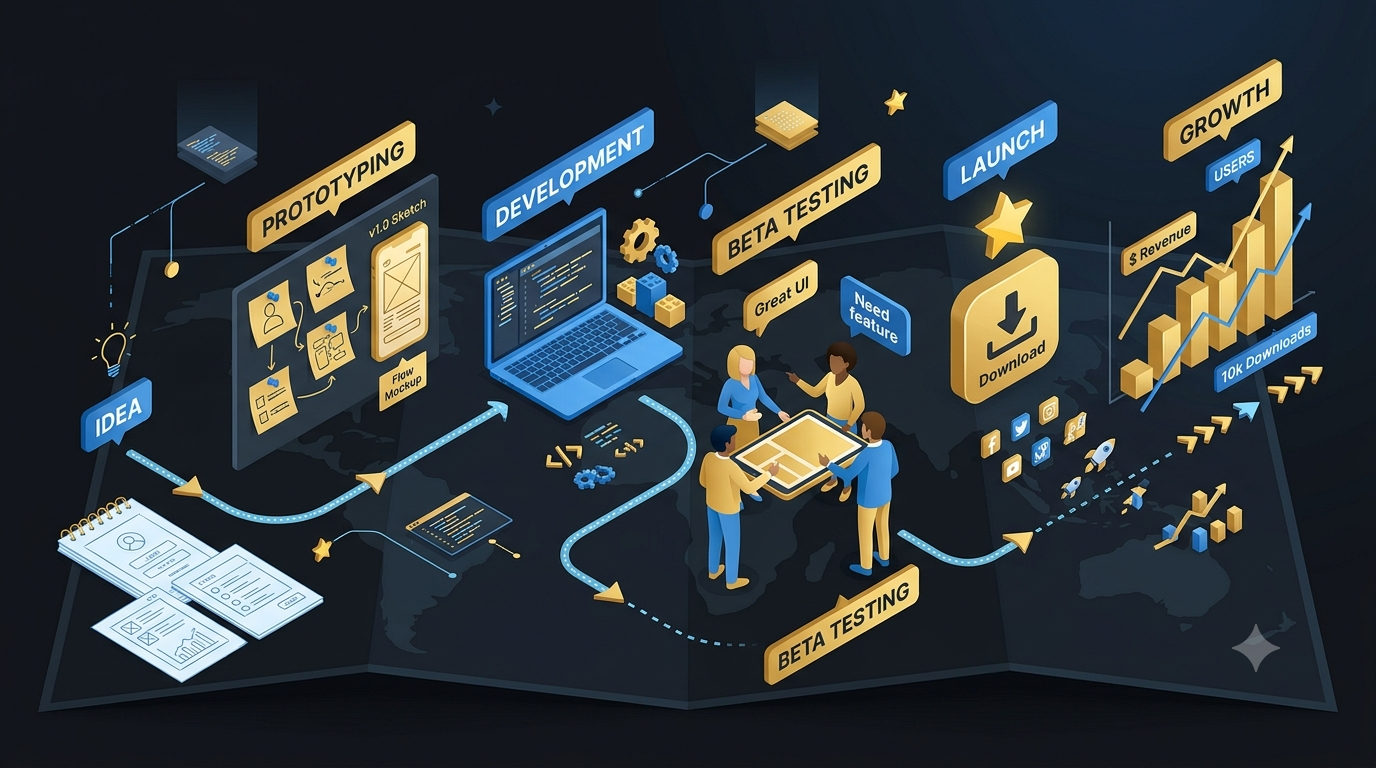
SaaS is one of the best business models available today — recurring revenue, infinitely scalable, and near-zero marginal cost for every new user you add. But most SaaS products fail not because the underlying idea is bad, but because the founders skip critical steps early on. They build too much before validating, or launch too late after spending all their runway on a product nobody has tested. Here's a step-by-step guide to doing it right.
Step 1: Validate Before You Build
Talk to at least 10 potential customers before writing a single line of code. You're not pitching — you're listening. Find one specific problem they are already paying to solve, even if they're solving it badly with Excel, WhatsApp groups, or a patchwork of tools. That problem, if shared by enough people, is your MVP. No amount of market research replaces 10 real conversations.
Step 2: Define Your MVP Scope
MVP does not mean a half-built product. It means the smallest complete version that solves the core problem well enough for someone to pay for it. Start by listing every feature you want to build — then cut 70% of it. What remains is your MVP. The features you cut aren't gone; they go on the roadmap. Scope discipline at this stage is the single biggest factor in whether you launch in 3 months or 18.
Step 3: Choose the Right Tech Stack
For most SaaS products, a modern and well-supported stack is more than sufficient — Next.js on the frontend, a Node.js or Python backend, PostgreSQL as your primary database, and deployment on AWS or Vercel. These choices give you speed, scalability, and a deep talent pool when you need to hire. Don't over-engineer your infrastructure before you have paying users. You can always optimise; you can't recover wasted months building systems nobody needs yet.
Step 4: Build in Short Cycles
Work in two-week sprints. Ship something testable at the end of every cycle — not a demo, something real users can actually use. Get your first real users on the product by week 3 or 4, even if it's rough. User feedback collected in week 3 is worth more than 3 months of internal assumptions. Every sprint should end with something in someone's hands and a set of questions answered.
Step 5: Launch and Collect Feedback
Launch to a small, controlled group first — 10 to 20 users who match your target profile. Watch how they use the product, not just what they say about it. Heatmaps, support tickets, feature requests, and churn reasons are your most valuable data sources at this stage. The gap between what users say they want and what they actually do in the product is where your most important product decisions live.
Step 6: Scale What Works
Once you have 20—30 paying users and you understand what drives retention and what causes churn, you're ready to invest in scale. That means performance optimisation, multi-tenancy architecture, polished onboarding flows, deeper integrations, and a proper support system. Scaling before you understand the retention drivers is how startups burn through funding without finding product-market fit.
Working with a Development Partner
Most founders simply don't have the bandwidth to build and sell at the same time — and they shouldn't have to. A development partner like KodeThat handles the full technical build: architecture, frontend, backend, infrastructure, and QA. That frees you to focus entirely on customers, feedback, and growth — the things only you can do. We work with SaaS founders from first prototype through to production-ready product, using an iterative process that keeps you in control without pulling you into daily technical decisions.
If you have a SaaS idea and aren't sure where to start — or you've started and are struggling to get to launch — get in touch with KodeThat. We'll help you define the right MVP scope, choose the right stack, and ship something real users can pay for.
Seo Tags:
build saas product india, saas mvp development, saas development guide, saas startup india, saas platform development navi mumbai, mvp development company india,